

- Vor Ort
17.03.2026

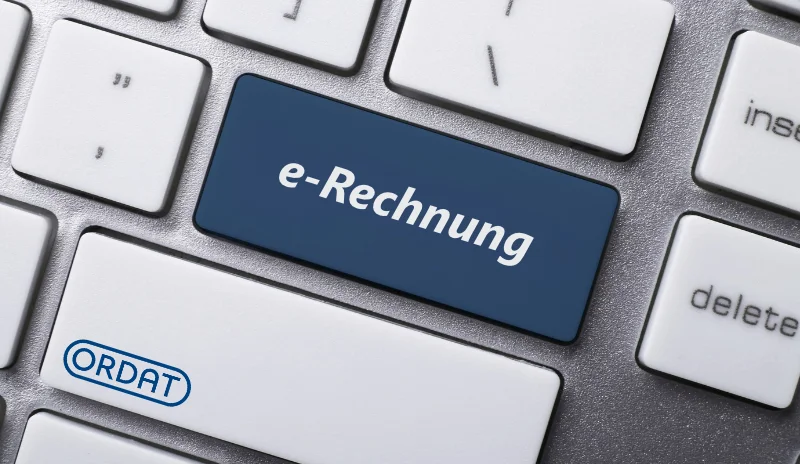
The EU has set a goal of establishing a digital reporting system for cross-border transactions by 2030. E-invoicing is a key milestone in this initiative. In Germany, the use of e-invoicing will be mandatory starting January 1, 2027. However, it is more than just a legal requirement; when used correctly, it can offer you significant benefits.
A standardized hybrid format consisting of a machine-readable XML file and a human-readable PDF file. It can be processed by both humans and systems and is primarily used in B2B. Can be implemented using the add-on for ORDAT.ERP Finance: Send ZUGFeRD 2.4 2,000 in Sales. ZUGFeRD stands for Zentraler User Guide des Forums elektronische Rechnung Deutschland.
Other unstructured, non-machine-readable formats, such as plain PDF files, do not meet the requirements for mandatory e-invoicing. Various EU countries have their own e-invoicing standards, which means that other formats may also exist internationally. However, the chosen standard must in any case comply with EN 16931, which ensures compatibility.
From a technical standpoint, implementing the e-invoicing requirement is straightforward at first: You simply need to be able to send, receive, and process invoices in one of the specified formats. Your ORDAT.ERP can handle this with the appropriate add-ons, allowing you to meet the legal standards—and fulfill the basic prerequisite for all subsequent steps.
Thanks to the machine-readable invoice format, invoice data can now be automatically extracted by the ERP system and reconciled with other information stored there—such as order data and goods receipt data. Manual invoice verification is then only necessary, for example, in the event of discrepancies. The approval process for an invoice can thus be automated all the way through to approval. Afterward, the document and the transmission medium can also be automatically stored in an audit-proof manner within a document management system (DMS). ORDAT.ERP finance is open to integration with any DMS system.
E-invoicing also offers advantages when it comes to billing: For example, data from quotes created in the system can be automatically converted into an e-invoice format, sent, and then archived in a document management system—with virtually no manual effort.
Invoices are therefore reviewed, approved, or issued more quickly and with fewer errors, reducing the workload for administrative staff. At the same time, in many cases, the number of invoice corrections and the effort required for collections decrease. For you, this means your employees have more time to focus on strategically important tasks.
1. Automation and Efficiency:
Manual data entry is eliminated, and all process steps—from ordering to payment—are seamlessly linked. This reduces errors and increases processing speed.
3. Faster Payment Processing:
Automation enables faster processing of invoices and payments, which improves cash flow and strengthens supplier relationships.
5. Compliance and Security:
E-invoices meet legal requirements and protect companies from errors, fraud, and fines through digital signatures and encryption.
2. Cost savings:
Less manual effort, shorter processing times and the avoidance of paperwork lead to considerable cost savings.
4. Transparency and traceability:
Digital processing means that all steps in the P2P process can be monitored, which greatly improves traceability and control.
6. Resource-efficient:
Digitizing invoice management contributes significantly to reducing paper consumption.
Even though many people view e-invoicing as nothing more than a legal requirement, it can also help your company move forward in other ways: When combined with data from your ERP system, it creates efficient, secure, and future-proof invoicing workflows.
Do you have any further questions, or do you need assistance implementing e-invoicing and procure-to-pay processes in your company? We’d be happy to advise you.

